Wallpolla Island
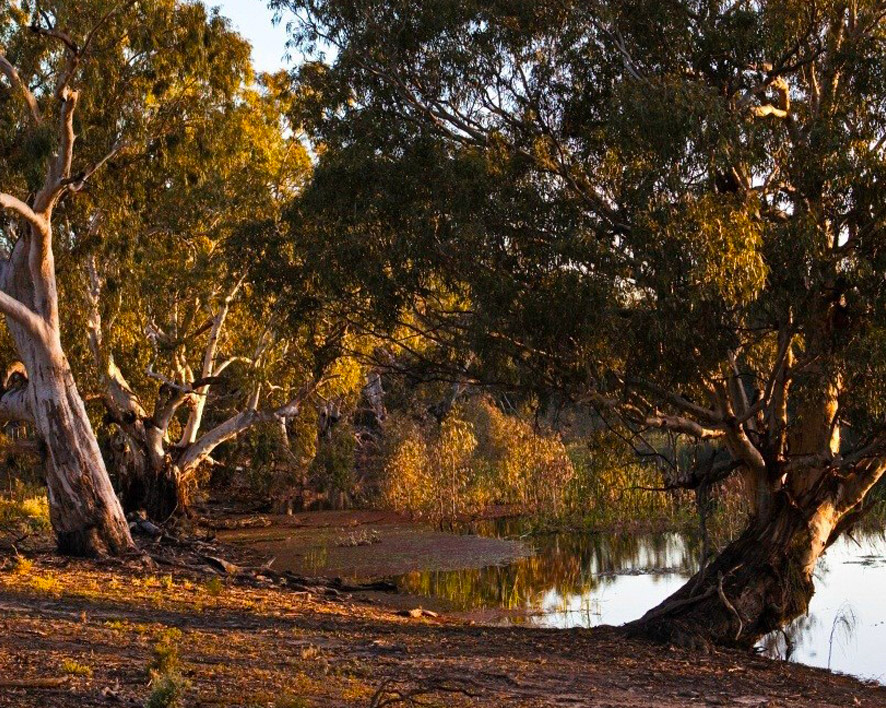
Wallpolla Island is a large and ecologically significant Murray River floodplain, supporting nationally important wetlands, forests and wildlife.
Latest news
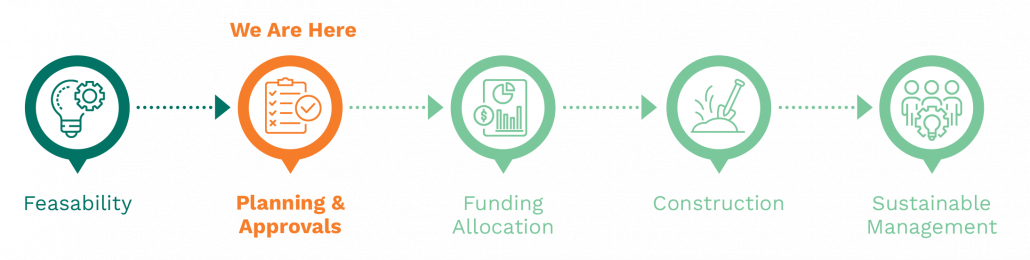
The public exhibition of the Environment Effects Statement and draft Planning Scheme Amendment for Wallpolla Island and Lindsay Island closed on Friday, 31 July 2026. The Minister for Planning has appointed a Standing Inquiry and Advisory Committee (SIAC). The SIAC will conduct a public hearing commencing in the week beginning Monday, 14 September 2026. To find out more, please visit the EngageVictoria website.
About
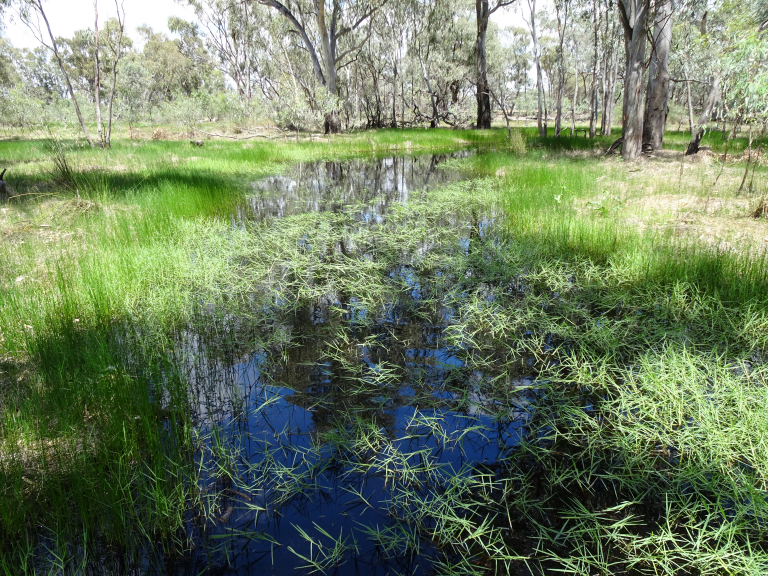
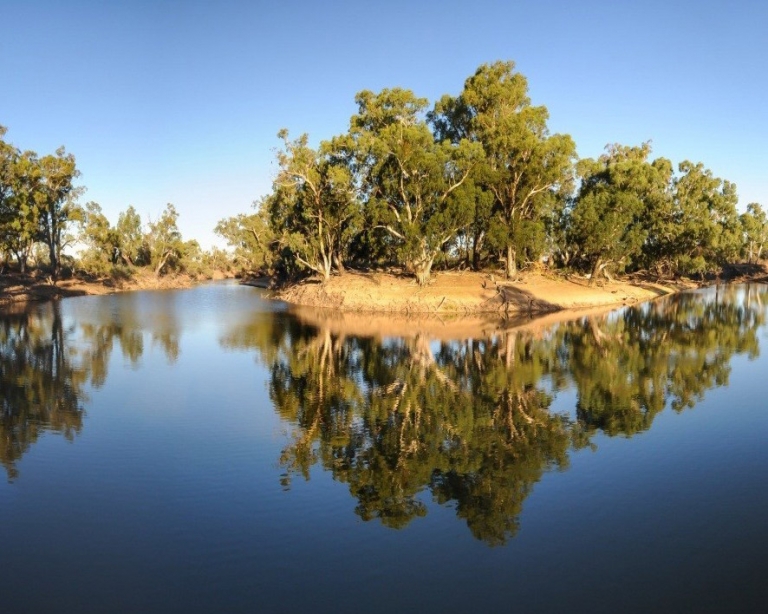
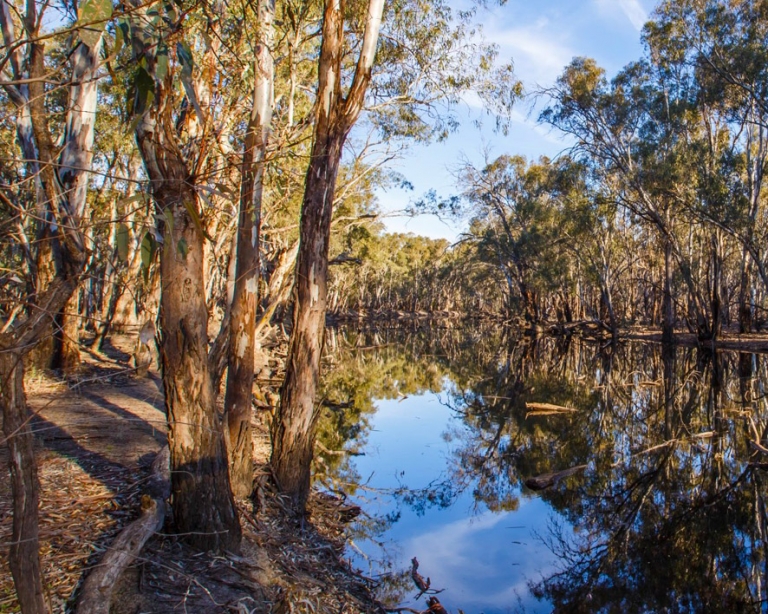
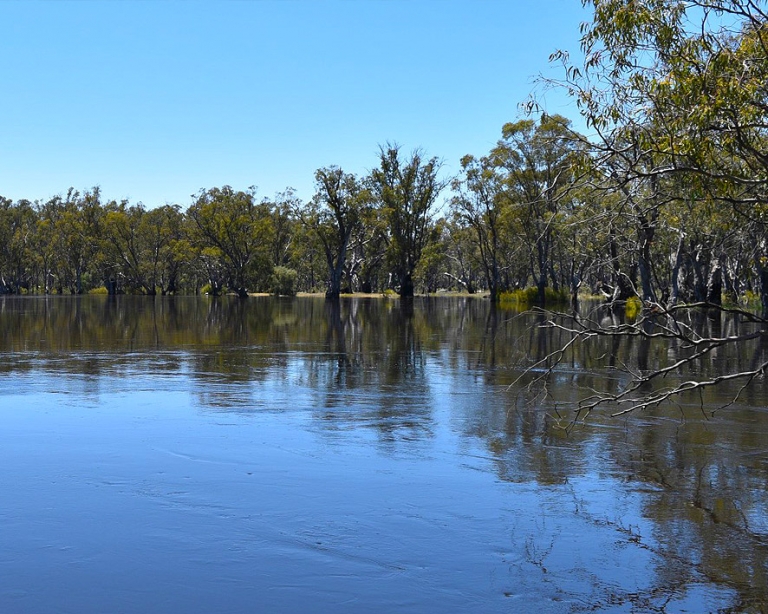
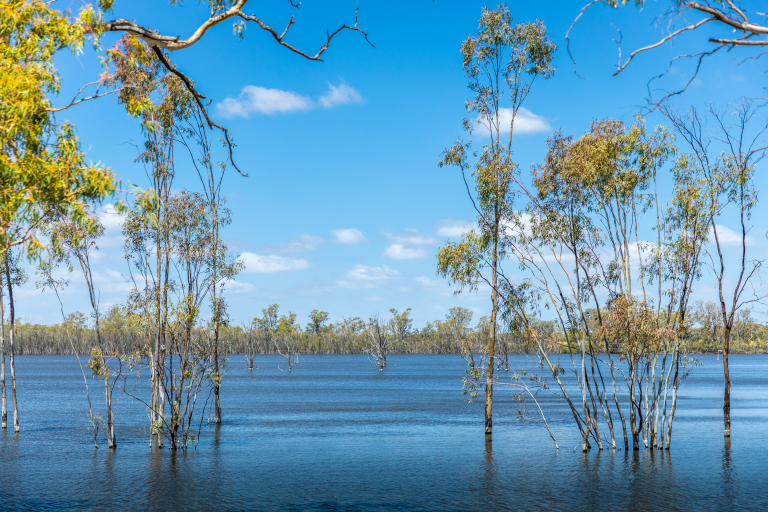
Wallpolla Island forms part of a large, relatively flat floodplain shaped by the Murray River, with a network of permanent and temporary wetlands and flood-dependent vegetation. Wallpolla Creek plays a central role in moving water across the floodplain, linking the river to a mosaic of wetlands and low-lying habitats.
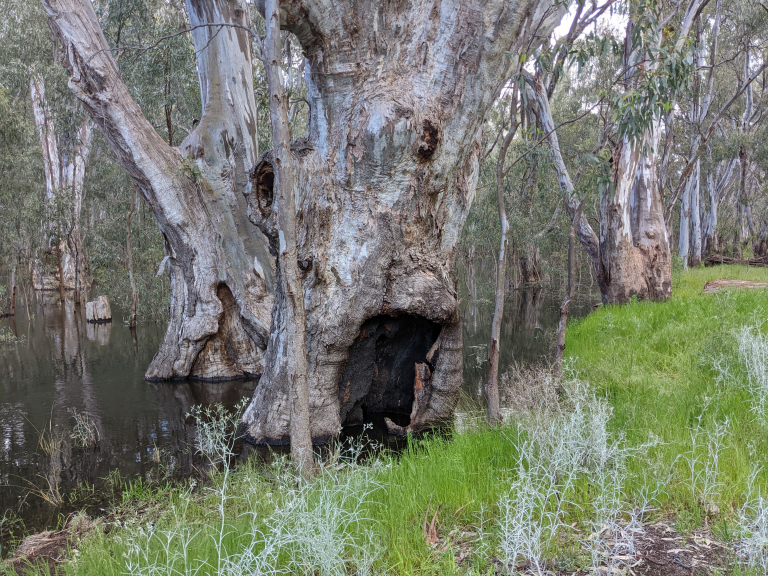
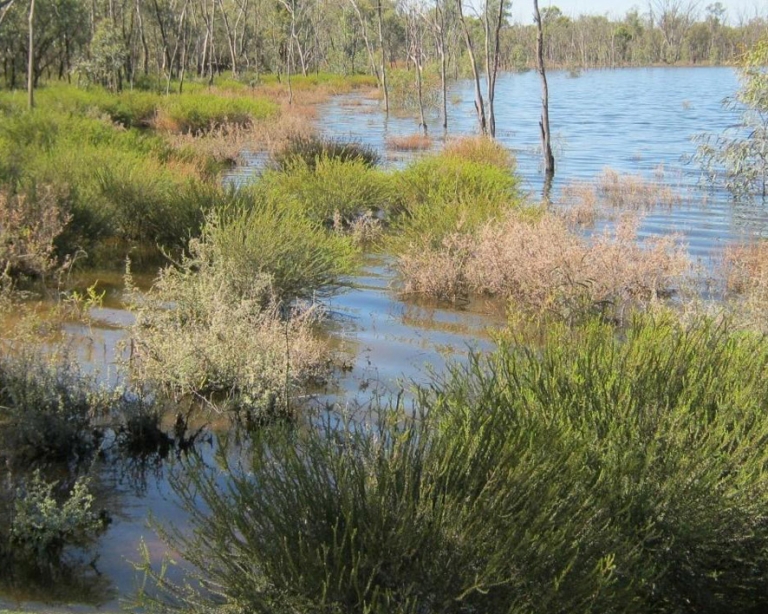
The floodplain supports river red gum forests, black box woodland, lignum shrubland and saltbush communities, which provide habitat for a wide range of native wildlife. These include frogs, waterbirds, small native fish and threatened species such as the growling grass frog, Giles’ planigale and Murray cod.
Historically, Wallpolla Island flooded regularly, with water spreading across the floodplain often enough to sustain healthy vegetation and productive food webs. River regulation, including dams, weirs and levees, has reduced the frequency, duration and extent of natural flooding. In some parts of the floodplain, the time between floods has increased well beyond what flood-dependent plants and animals can tolerate.
The Wallpolla Island Floodplain Restoration Project would improve the way environmental water can be delivered to, moved across and retained on the floodplain. By working with natural river flows and using carefully designed infrastructure, the project aims to restore more natural flooding patterns and support healthier floodplain ecosystems.
Wallpolla Island is a place of deep cultural, spiritual and historical significance for Traditional Owners, including the First People of the Millewa-Mallee Aboriginal Corporation. Protecting cultural heritage and working closely with Traditional Owners is central to how the project is planned and delivered.
Project milestones:
Project features
Most of the infrastructure would be located on crown land, with some work proposed on private property. The Wallpolla Island project complements and builds on existing
environmental watering at Wallpolla Island, built under The Living Murray program as part of the Chowilla-Lindsay-Wallpolla Icon Site project. These works were completed in 2006 and included the installation of an inlet regulator at Horseshoe Lagoon.
Environmental watering proposed under the VMFRP at the Wallpolla Island project site would be constructed across four Water Management Areas
and would include the following:
- One very large regulator (which act like gates) incorporating a vertical slot fishway
– Three large regulators
– Twelve small regulators
– Approximately 5.0 km of containment banks with access tracks on top
– Eight culverts
– Three spillways - Four permanent hardstand areas for temporary pumps (to transfer environmental water and construction water from the Murray River, Wallpolla Creek or Snaggy Point Billabong, as required during operation and construction)
– Four pipeline alignments for temporary pump infrastructure (for operation)
– Around 27 km of existing access tracks that are subject to upgrade
– Around 15 km of existing access tracks that will be used during construction and operation that would be used for maintenance activities only
– 1.5 km of new access tracks that would be accessible to all park users.
No permanent pumps or pipelines are proposed as part of the Wallpolla Island project.
Location
The Wallpolla Island project site is located north-west Victoria, approximately 30 km west of Mildura, immediately downstream of the junction of the Murray and Darling rivers. It is part of the Chowilla-Lindsay-Wallpolla floodplain within Murray-Sunset National Park and The Living Murray Chowilla Floodplain icon site.
Project benefits
-
3,109 hectares
Of lakes and floodplain targeted for improved ecological health
-
9,709 large trees
would benefit from improved watering events
-
149 rare or threatened species
Such as the Winged Peppercress and Murray Hardyhead are predicted to benefit from improved habitat conditions
-
Local employment
Opportunities during construction and operation
-
Cultural significance
Aboriginal cultural significance acknowledged and respected
-
Improved resilience to threats such as climate change
Due to rising temperatures and reduced rainfall
Environmental Planning and Assessment
Under the Environment Effects Act 1978 (Vic), the Victorian Minister for Planning determined that an Environment Effects Statement (EES) is required for the Lindsay Island Floodplain Restoration Project and Wallpolla Island Floodplain Restoration Project. The EES describes the potential environmental effects of the projects and identifies measures to avoid, minimise and manage impacts. An EES has been prepared in response to the scoping requirements issued by the Victorian Minister for Planning.
As part of the environmental planning and assessment pathway, a draft Planning Scheme Amendment (PSA) has also been prepared. The draft PSA proposes changes to the Mildura Planning Scheme to support the delivery of the projects.
The EES and the draft Planning Scheme Amendment (PSA), were on public exhibition between Monday 22 June and Friday 31 July 2026. The Minister for Planning has appointed a Standing Inquiry and Advisory Committee (SIAC) to conduct a public hearing. Following the public hearing and a thorough review process, the SIAC will submit its report to the Minister for Planning to inform their assessment of the effects of the projects.
More information about the EES and assessment pathway is available on the VMFRP Environmental Assessment Portal
More information about the SIAC and assessment process is available on the EngageVictoria website.
Proposed Construction
If the Wallpolla Island project is approved, construction is expected to take around 18 months to complete. The construction footprint, which is the area of land needed to build the projects, covers 64 hectares, and includes all infrastructure and associated construction activities, including laydown areas, site compounds, and workforce facilities, upgrades to site access and borrow sites. The project is required to take an avoid and minimise approach to construction. This means that if approved, further design refinements, in consultation with stakeholders and the community, would be made, and as a result, the disturbance footprint is expected to be reduced. Construction work would only be carried out within the approved construction footprint.
Before the start of any construction, detailed designs would be finalised and additional approvals and construction permits would be required. The community would be updated during the pre-construction period, and notified before the start of any works.
Construction impacts would be monitored before, during and after works. Temporary construction disturbance areas would be rehabilitated, with tracks and surrounding areas restored to the same or better condition than prior to works, supporting improved long-term environmental and land management outcomes.
Long-term ecological monitoring would continue after construction is complete to track the recovery of the floodplain and inform future watering decisions.
Proposed Operations
Four potential operating scenarios have been developed to deliver environmental water at different frequencies and durations based on the ecological needs of the Wallpolla Island sites.
These scenarios would rely on high Murray River flow events and temporary pumps to deliver water to each site.
Water would be delivered using a combination of:
- Natural high river flows
- Managed flows using gated structures (regulators)
- Temporary pumping during dry conditions
Different watering approaches would be used depending on river levels and floodplain condition. In some years, water may flow naturally onto the floodplain. In others, infrastructure would allow water to be held for longer or delivered to areas that would otherwise remain dry.
This flexible approach allows the project to respond to changing conditions while using water efficiently.
Community updates
During the public exhibition period, the project team hosted four community drop-in sessions. These sessions were designed to help the community to navigate the EES documentation and answer questions about the project’s benefits and impact mitigation measures.
If you were unable to attend a drop-in session and would like information about the EES or the project generally, please reach out to the team at 1800 808 830 or email info@vmfp.vic.gov.au
Frequently Asked Questions
Why are floodplain restoration works required at Wallpolla Island?
What happens if the floodplains are not restored?
Will the environmental works impact access to Wallpolla Island?
How does Wallpolla Island fit with other VMFRP sites?
How would cultural heritage be managed?
Who is responsible for the project?
Sign up to receive updates
If you would like to receive email updates about Wallpolla Island, please register here.
Register for updatesContact the project team
If you have questions about Wallpolla Island, or would like to provide feedback, please email the project team. We’ll put you in touch with the right person.
info@vmfrp.vic.gov.au