Belsar–Yungera project site
Belsar–Yungera is a large and ecologically important Murray River floodplain, supporting wetlands, forests and habitat for threatened native species.
Location
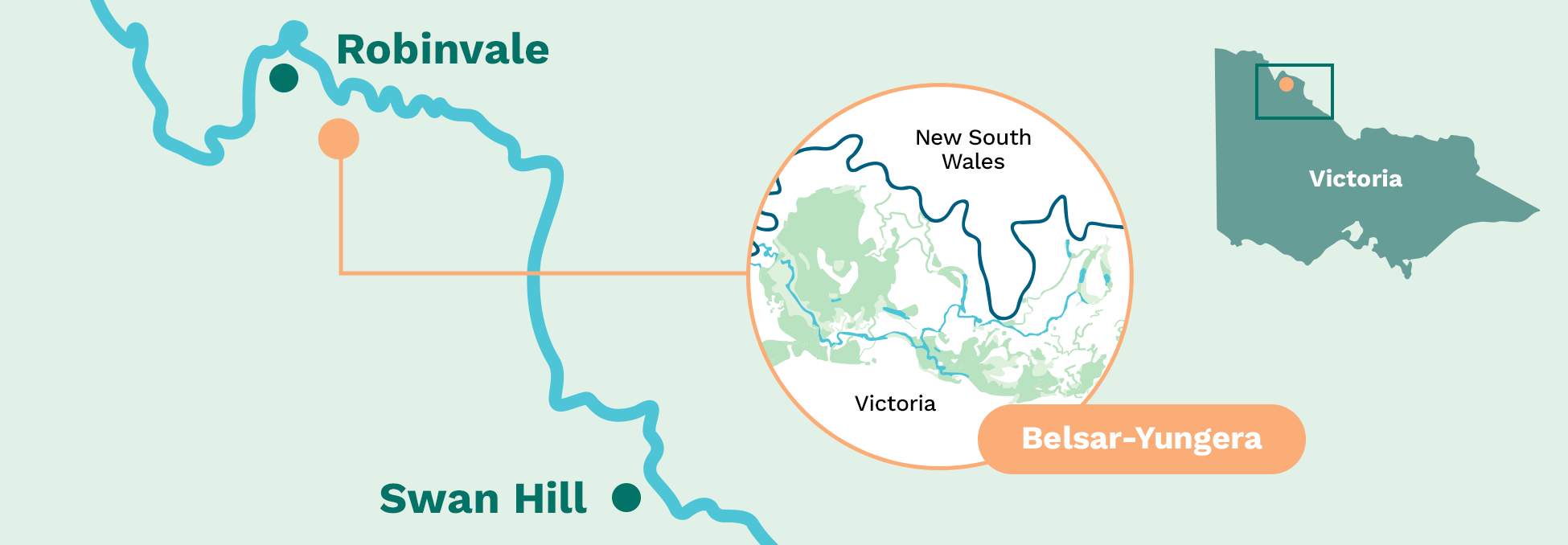
North-west Victoria, between Mildura and Swan Hill, approximately 20–30 km south-east of Robinvale.
Part of the Murray River floodplain, including Belsar and Yungera islands and surrounding wetlands.
 View on Google Maps
Information
Belsar–Yungera is one of the priority floodplain sites being restored under the Victorian Murray Floodplain Restoration Project (VMFRP). It is a large floodplain complex made up of islands, creeks, wetlands and lakes formed by anabranches of the Murray River, including Narcooyia, Bonyaricall and Yungera creeks.
The floodplain supports river red gum forests, black box woodlands, lignum shrubland and floodplain lakes, providing habitat for a wide range of native wildlife. These include waterbirds, frogs, bats and native fish, as well as threatened species such as the growling grass frog, Murray cod, regent parrot and white-bellied sea eagle.
Historically, water from the Murray River spread regularly across the Belsar–Yungera floodplain, sustaining healthy vegetation and productive food webs. River regulation, including dams, weirs and levees, has reduced the frequency, duration and extent of natural flooding, increasing the time between flood events beyond what many flood-dependent plants and animals can tolerate.
Narcooyia Creek has also been modified over time to support irrigation delivery, further altering natural flow patterns across the floodplain. While targeted environmental watering has delivered local ecological benefits in recent years, much of the floodplain remains difficult to reach under current arrangements.
The Belsar–Yungera Floodplain Restoration Project will improve the way environmental water is delivered to, moved across and retained on the floodplain. By working with natural river flows and using targeted infrastructure, the project aims to restore more natural flooding patterns, improve connectivity between waterways and support healthier, more resilient floodplain ecosystems.
Belsar–Yungera is a place of deep cultural, spiritual and historical significance for Traditional Owners. Protecting cultural heritage and working closely with Traditional Owners is central to how the project is planned and delivered.
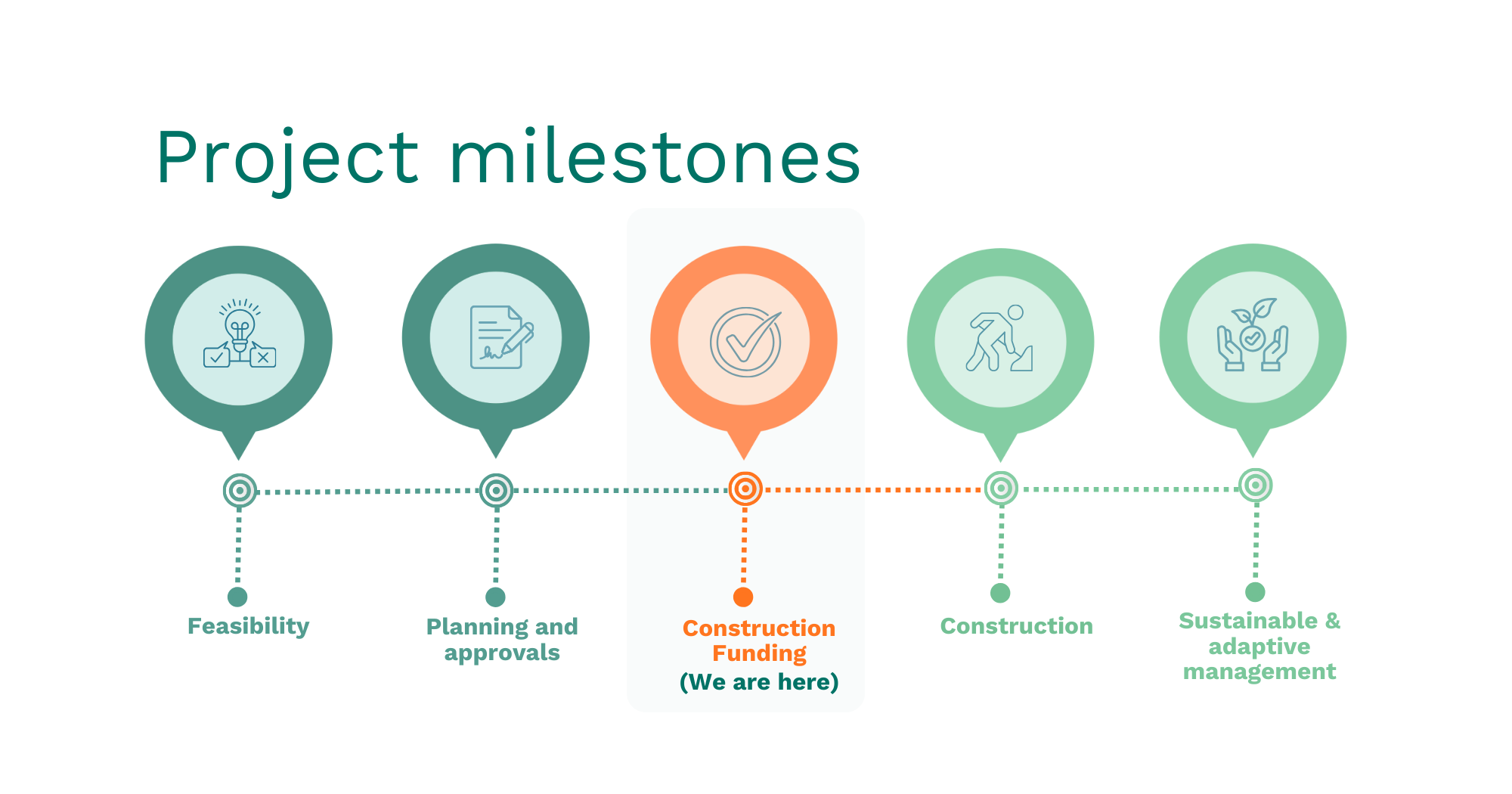
The project is currently progressing through planning and environmental assessment.
Project phase: Planning and environmental assessment
Fast facts
Key biodiversity corridor
Includes Lakes Powell and Carpul, two major floodplain wetlands which is a key biodiversity corridor linking the Murray River and Mallee landscapes.
Up to 2,374 hectares
Of floodplain targeted for restoration.
Diverse ecosystems
Includes river red gum forest, black box woodland, lignum shrubland and floodplain lakes.
Threatened species
Supports threatened species including Murray cod and growling grass frog.
Efficient water use
Uses gated structures (regulators), containment banks and temporary pumps to deliver improved environmental outcomes.
Community values
Protects cultural, environmental, recreational and community values.
Project milestones
Why floodplain restoration is needed
Floodplains depend on regular wet and dry cycles to remain healthy. These cycles support vegetation growth, trigger breeding events for fish and frogs, create feeding habitat for waterbirds and return nutrients to the river system.
At Belsar–Yungera, river regulation has reduced flooding and increased the length of time between flood events. In some areas, dry periods now last far longer than floodplain plants and animals can tolerate, reducing the floodplain's ability to recover from drought and increasing vulnerability to climate change.
Restoring more natural flooding patterns will help improve floodplain health, strengthen ecological resilience and support cultural, environmental and recreational values into the future.
Learn more: Belsar–Yungera flooding frequency fact sheet (PDF)
What is being planned?
The project proposes new and upgraded floodplain infrastructure that will work alongside natural river flows and environmental water to improve inundation across the Belsar–Yungera floodplain.
Planned elements include:
- Large and small gated structures (regulators) to control water movement into creeks, wetlands and floodplain areas
- A fishway to support fish movement and connectivity
- Containment banks to help retain water on the floodplain
- An underground pipeline linking Lakes Powell and Carpul to temporary pump locations
- Temporary pump hardstands to deliver environmental water during extended dry periods
- Use of existing tracks and disturbed areas where possible to minimise impacts
The infrastructure will allow water to be delivered under different conditions:
- During large natural floods, structures can be operated to allow water to flow naturally across the floodplain
- When floods are shorter than needed, water can be held on the floodplain for longer
- During extended dry periods, environmental water can be used to 'top up' key areas to support ecological health
Most infrastructure will be similar in scale to works delivered under The Living Murray program at other Murray River floodplains.
News and media
Coming soon.
Frequently asked questions
Why is Belsar–Yungera being restored?
Flooding now occurs less often and for shorter periods across much of the floodplain. Restoration will help return more natural flooding patterns, improving wetland health, forest condition and habitat for native species.
Without intervention, vegetation condition and habitat quality are expected to continue declining, increasing risks to biodiversity, cultural heritage and the long-term resilience of the floodplain.
2
Without intervention, wetlands, forests and waterways across the Belsar–Yungera floodplain are expected to continue declining. Extended periods without flooding place ongoing stress on flood-dependent vegetation, reduce habitat quality for native animals and weaken the floodplain's ability to recover from drought.
Over time, declining tree health and loss of understorey vegetation can disrupt breeding cycles, reduce food and shelter for wildlife and limit movement across the floodplain. If these trends continue, parts of the floodplain may degrade beyond natural recovery, increasing risks to biodiversity, cultural heritage values and the long-term health of the Murray River system.
How often will Belsar–Yungera be watered?
Watering will vary depending on river conditions and seasonal factors. Environmental water will be used to fill the gaps between natural floods, with different parts of the floodplain watered at different frequencies based on ecological needs.
Will access to Belsar–Yungera change?
During planning, there are no changes to access. During construction or watering events, some tracks may be temporarily affected, particularly during larger floods. Any changes will be communicated in advance where possible through Parks Victoria and project updates.
How is cultural heritage being managed?
Cultural heritage is a key consideration. A Cultural Heritage Management Plan is being prepared in consultation with Traditional Owners to identify, protect and manage cultural values before, during and after works.
Traditional Owners have maintained strong cultural connections to Country for thousands of years. Working closely with Traditional Owners is central to protecting cultural values and informing how the project is planned and delivered.
How does Belsar–Yungera fit with other VMFRP sites?
Belsar–Yungera is one of the floodplain sites being restored under the VMFRP. Together, these sites aim to improve the health of the Murray River floodplain at a landscape scale by restoring connectivity and strengthening ecological resilience.
Each site responds to local conditions. At Belsar–Yungera, this includes managing water across a large floodplain with interconnected creeks, islands and wetlands that are highly sensitive to long dry periods.
How will success be measured?
Monitoring programs will track vegetation condition, water quality and wildlife response over time to understand how the floodplain is responding and whether ecological objectives are being met.
Who is delivering the project?
The VMFRP is delivered under the Murray–Darling Basin Plan by Lower Murray Water, Goulburn-Murray Water, Mallee and North Central Catchment Management Authorities, Parks Victoria and the Department of Environment, Land, Water and Planning, through funding from the Australian Government's Department of Climate Change, Energy, the Environment and Water.
Learn more:
Sign up to receive updates
If you would like to receive email updates relating to the Belsar–Yungera project site, please register here:
Contact the project team
If you have questions about the Belsar–Yungera project site, or would like to provide feedback, please email the project team: info@vmfrp.vic.gov.au and we'll put you in touch with the right person.